How to Motivate and Retain a Productive Manufacturing Workforce
Improving Communication & Connection in a Factory Setting
Why Timing Matters: The Power of Real-Time Communication in Manufacturing
In manufacturing, timing is everything. The same holds for communication. Whether it’s a safety update, an equipment alert, or a last-minute shift change, real-time communication ensures the factory stays on track and, more importantly, stays safe. Delayed messages can lead to confusion, mistakes, or, worse, accidents.
But real-time communication is more than just operational updates. It’s the thread that ties workers to the bigger picture. When employees receive timely information, they feel more in control of their environment and more confident in their roles. It’s not just about knowing what’s happening; it’s about understanding how their work fits into the broader mission.
For example, sending a mobile alert about a line change can be the difference between seamless production and a bottleneck. A quick shoutout in a group chat for a job well done can lift morale in seconds. Sharing goals and metrics at the start of a shift helps everyone move in the same direction. These moments of clarity align teams, create a sense of purpose, and remind everyone that their contributions matter.
Research backs this up. A study from the Harvard Business Review found that real-time feedback improves employee performance and satisfaction. When employees know they’re on track, they perform better, feel valued, and are more likely to stick around. It’s simple: timely communication builds trust, and trust builds stronger teams.
The impact goes beyond just productivity. When communication flows freely, employees feel more connected to the mission. They’re not just cogs in a machine; they’re part of something larger. And when people are aligned, they move forward together.
Real-time communication is an investment in clarity, trust, and efficiency. It’s about delivering the right information at the right time, so teams can stay on their toes, adapt quickly, and stay focused on the goal. And that, in the end, keeps everything running smoothly.
Using Technology to Bridge the Gap Between Leadership and Workers
In manufacturing, leadership and frontline workers often operate in separate spaces and schedules, creating a communication gap. Technology, such as platforms like Microsoft Teams, Recognize, and Slack, bridges this divide by enabling real-time communication.
Managers can send mobile alerts, share video updates, or give instant feedback, directly connecting leadership with the team. This reduces delays, fosters transparency, and makes communication more personal and immediate.
Digital platforms humanize leadership, making it more approachable and fostering trust and engagement. When employees feel connected to leadership, they’re more motivated, productive, and loyal, leading to a stronger, more cohesive team.
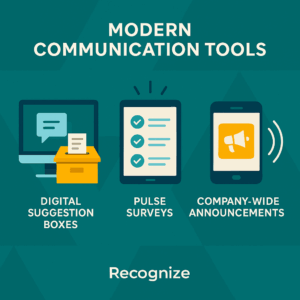
Modern Communication Tools: Digital Suggestion Boxes, Pulse Surveys, and Real-Time Announcements
In a fast-paced manufacturing environment, top-down communication is crucial. But so is creating space for feedback from the frontline. The traditional suggestion box is a relic of the past; today, modern factories are embracing digital tools that not only make communication faster but also more impactful. These tools offer employees a voice, ensuring they are heard and that their feedback drives meaningful change.
Digital Suggestion Boxes: Anonymity and Openness
Gone are the days of physical suggestion boxes that collect dust in the corner of the break room. Digital suggestion boxes allow employees to share ideas or concerns anonymously, making them more likely to contribute without fear of judgment or repercussion.
This anonymity encourages openness and honesty, creating a culture where everyone feels safe to voice their thoughts.
Data Insight: A 2019 Gallup study revealed that employees who feel their opinions are heard are 4.6 times more likely to feel empowered at work. Anonymity in feedback systems plays a huge role in fostering this sense of empowerment.
Pulse Surveys: Quick Feedback for Real-Time Insights
Pulse surveys are a game-changer for checking in on employee satisfaction, morale, and workload. These brief, easy-to-answer surveys provide valuable insights into how workers are feeling, without taking up too much of their time. Whether it’s a quick check-in on a recent shift or a survey about team dynamics, pulse surveys give leadership a real-time pulse on the workforce, allowing them to address concerns before they snowball into bigger issues.
Company-Wide Announcements: Instant Communication
One of the challenges in manufacturing is ensuring everyone stays informed, especially when employees work in different shifts or locations. Digital tools like mobile alerts and dashboard notifications ensure that company-wide announcements reach everyone, regardless of where they are or when they work. Whether it’s a safety update, a new policy, or a shift change, these announcements can be delivered instantly, keeping employees in the loop and aligned.
Keeping Remote or Second/Third Shift Workers Engaged
Engaging second and third shift workers is a major challenge in manufacturing. These employees often miss out on meetings and updates held during standard hours, leading to feelings of exclusion. To bridge the gap, companies can record all-hands meetings, host mini-huddles during off-hours, and duplicate key communications.
Celebrating wins across all shifts is essential. Recognizing top performers, regardless of schedule, helps ensure every employee feels valued. Mobile platforms also play a key role, allowing workers to stay informed and connected on their own time.
Remote teams and multi-site factories benefit from the same strategy: centralized updates, consistent recognition, and regular two-way communication.
Great communication isn’t about volume; it’s about making sure the right message reaches the right person at the right time. By combining tools like apps, surveys, announcements, and face-to-face interaction, companies build a culture of connection that boosts engagement, retention, and contribution.