How to Motivate and Retain a Productive Manufacturing Workforce
Chapter 4 - Retaining Manufacturing Employees Through Culture and Development
What about Culture?
According to O.C. Tanner, companies that excel in recognition are 7 times more likely to have employees who produce great work and 11 times less likely to experience layoffs.
Culture keeps employees connected and engaged. When workers feel respected and recognized, even through small gestures like a timely “You matter,” they’re more likely to stay and be motivated.
Research shows that recognition directly strengthens belonging and loyalty. Gallup’s research indicates that employees who feel adequately recognized are 45% less likely to leave their organization over the next two years.
What about Development?
People want to grow. Not everyone wants to climb a ladder, but most want to know they’re moving forward. A workplace that offers chances to learn, improve, and take pride in their progress gives people a reason to stay. When employees see a future, they stop looking for the exit.
Building a Culture of Appreciation and Continuous Feedback

Retention starts with feeling valued. When employees know their work matters and someone notices, they have a reason to stay. In manufacturing, appreciation doesn’t require grand gestures. A simple “thank you” for staying late to fix a machine or a shoutout during the daily standup can make a significant impact.
It’s also about not waiting for annual reviews to discuss performance. Continuous feedback, clear, honest, and timely, helps employees grow, solve problems quickly, and feel more connected to their work.
Gallup found that employees who receive daily feedback are 3.6 times more likely to be motivated to do outstanding work. In other words, a little guidance offered consistently goes a long way.
Creating Paths Forward: Cross-Training, Promotions, and Mentorship
When employees don’t see a future with the company, they start looking elsewhere. Stagnation dulls motivation. But when companies invest in growth, from the shop floor to leadership roles, they give people a reason to stay.
Career development doesn’t need to be complicated. It starts with opportunity:
Cross-Training
Teaching employees to operate different machines or take on new tasks builds versatility. It also sends a clear message: we trust you to do more.
Companies like Wegmans Food Markets and Delta Air Lines have programs that rotate employees through different roles, helping staff broaden their skills while keeping the daily work dynamic. Cross-training also prepares teams to adapt when priorities shift.
Promotions
A path from line worker to team lead or supervisor shouldn’t be left to guesswork. When employees understand how to move up and see others doing it, they’re more likely to stay and aim higher.
Companies like Zappos and American Express make internal career ladders visible, giving employees a clear roadmap for advancement. Growth needs structure, not just hope.
Mentorship
Pairing new hires with seasoned employees builds confidence early on. Mentors help others navigate day-to-day challenges, pass down knowledge, and make the workplace feel less like a machine and more like a team.
Organizations such as SAS Institute and Harley-Davidson emphasize mentorship programs that connect new talent with experienced leaders to accelerate learning and engagement.
Platforms like Recognize support these efforts by making progress visible, tracking milestones, surfacing wins, and weaving recognition into the daily routine.
The Role of Leadership in Fostering Engagement
Great cultures don’t just happen; they’re created by leadership. In manufacturing, where the hierarchy is often flat and direct, leadership has a significant influence on the employee experience. When supervisors and managers are present, check in, and genuinely care, employees take notice. The tone set by leadership permeates the organization.
Up to 70% of the variance in employee engagement is attributable to the manager. This statistic underscores the pivotal role leaders play in shaping the workplace environment.
To guide meaningful engagement, managers can use the following questions, based on Gallup’s Q12 framework:
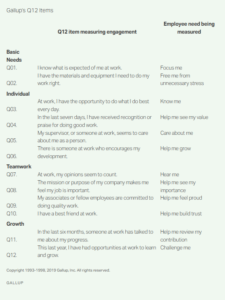
Explore Recognize’s survey feature for employee engagement.
Key Leadership Practices to Enhance Engagement:
- Be Present on the Floor: Regularly walking the floor demonstrates accessibility and commitment.
- Provide Real-Time Feedback: Timely, constructive feedback helps employees understand expectations and feel valued.
- Recognize Achievements: Acknowledging both big and small wins boosts morale and reinforces positive behaviors.
- Foster Open Communication: Encouraging employees to voice concerns and ideas builds trust and collaboration.
- Support Professional Growth: Investing in employee development shows a commitment to their future within the company.
Leaders who embody these practices contribute to a workplace that feels human and respectful, not just mechanical. Such environments not only enhance employee satisfaction but also improve retention and productivity.
Employee Surveys and Feedback Loops: Listening to Retain
You can’t improve what you don’t understand. Regular employee surveys provide a structured way to gather insights into what’s working and what’s not. The most effective organizations don’t just collect feedback; they act on it.
According to Gallup’s 2024 State of the Global Workplace report, only 23% of employees are engaged at work, while 62% are not engaged, and 15% are actively disengaged. This disengagement contributes to significant productivity losses globally.
Implementing tools like Recognize can streamline the feedback process. Recognize offers customizable employee engagement surveys, including pulse surveys and Employee Net Promoter Score (eNPS) assessments, directly within platforms like Microsoft Teams and Outlook. This integration facilitates higher participation rates and timely feedback.
See more about Recognize’s eNPS
Case in Point: Addressing Shift Disparities
A mid-sized manufacturing company in Texas utilized quarterly engagement surveys and discovered that night shift workers felt excluded from company events and communications. In response, the company organized shift-inclusive recognition events and ensured leadership presence during overnight shifts. Within two quarters, engagement scores among night shift employees increased by 18%.
Closing the Loop: From Feedback to Action
Collecting feedback is only the first step. Acting on it demonstrates to employees that their voices matter. By addressing concerns and implementing changes based on survey results, organizations can foster a culture of trust and continuous improvement.
In manufacturing, where operational efficiency is paramount, leveraging tools like Recognize to gather and act on employee feedback can lead to increased engagement, reduced turnover, and a more cohesive workforce.