How to Motivate and Retain a Productive Manufacturing Workforce
Understanding Employee Engagement in Manufacturing
What Is Employee Engagement?
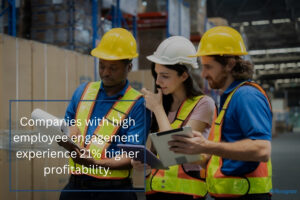
Gallup has found that companies with high employee engagement experience 21% higher profitability.
Employee engagement is an employee’s emotional commitment towards their work and company. Engaged employees care about their tasks and the company’s success, viewing their performance and well-being as integral to the organization’s achievements.
At its heart, employee engagement is about connection, how much someone invests emotionally and mentally in their job and the company. It goes way beyond just showing up.
In manufacturing, an engaged worker:
-
- Takes pride in their role on the line.
How Engagement Impacts Productivity and Safety
Engagement, productivity, and workplace safety are tightly connected, and the numbers prove it. Research shows that highly engaged teams experience 48% fewer safety incidents compared to less engaged ones. In manufacturing, where even a split-second distraction can cause serious injury, that difference is huge.
Engaged employees not only work harder; they work smarter and safer. They’re more likely to follow procedures, report hazards early, and look out for their teammates.
That proactive culture doesn’t just prevent accidents; it saves money. You can even estimate the financial impact for your own company using our workplace safety calculator. As shown here, small improvements in engagement and recognition can translate into tens of thousands of dollars in annual savings, while also protecting the people who make the work possible.
- Looks out for teammates and speaks up when something’s off.
- Feels recognized by leadership for their efforts.
- Sees chances to grow, even in a hands-on role.
Engaged employees aren’t just doing the job. They’re involved, aware, and fully connected to how their work fits into the bigger picture. Whether assembling parts, running machinery, or packaging, they feel part of something meaningful.
Employee engagement has been a key concept in management since the 1990s and gained widespread use in the 2000s. Despite some criticism over its challenging measurement, studies show that employee engagement is closely linked to a company’s profitability and overall financial health.
What Gets in the Way: Barriers to Engagement
Despite its clear benefits, fostering engagement in manufacturing comes with some unique challenges. Unlike desk jobs with flexible hours and remote options, manufacturing is rigid and physically demanding.
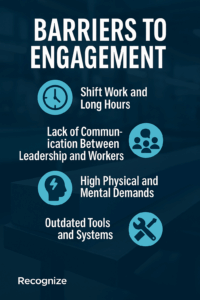
Here are some of the top barriers to engagement on the factory floor:
Shift Work and Long Hours
 Long or rotating shifts can wear down even the most motivated workers. Imagine you’re a manufacturing technician. One week you’re on day shift, the next it’s night, your sleep is disrupted, your routine is upside down, and even your time with family takes a hit. Over time, these rotating shifts can wear down even the most motivated workers.
It’s tough to feel part of the team when you rarely see your coworkers or supervisors. And when recognition is mostly given during normal hours, shift workers can feel forgotten.
In the manufacturing sector, shift work and extended hours are commonplace to maintain continuous operations. However, these demanding schedules can negatively impact employee engagement and well-being.
A study by the Manufacturing Institute and the American Psychological Association found that only 65% of frontline manufacturing workers are satisfied with their company’s recognition practices, and just 59% are satisfied with communication practices. This lack of recognition and communication can lead to feelings of isolation and undervaluation among shift workers.
By prioritizing consistent communication, recognizing contributions across all shifts, and offering flexible scheduling options, manufacturing organizations can enhance employee engagement, reduce turnover, and promote a healthier work environment.
Lack of Communication Between Leadership and Workers
When was the last time leadership walked the floor, not to inspect, but to engage?
A gap between management and frontline workers is one of the biggest engagement challenges in manufacturing. Decisions are often made far from the production line, and that divide only deepens with poor communication.
The 2022 Manufacturing Engagement Report found that nearly 46% of employees rarely receive feedback or recognition from leadership. That’s nearly half the workforce working without clear guidance or appreciation.
Face-to-face communication builds trust and keeps everyone aligned. Whether it’s a quick check-in from a manager or a shoutout at the beginning of a shift, small gestures can have a huge impact.
High Physical and Mental Demands
Manufacturing roles often involve repetitive tasks, long hours, and exposure to challenging environments, leading to both physical strain and mental fatigue. A 2022 report highlighted that 47% of workers in manufacturing-related industries felt stressed at their jobs, and 32% were too exhausted to engage with friends and family after work.
These conditions can diminish employee engagement, resulting in higher absenteeism and turnover rates. Implementing wellness programs and providing support for mental health can help mitigate these effects, fostering a more engaged and resilient workforce.
By addressing the physical and psychological demands of manufacturing work, organizations can enhance employee well-being and productivity.
Outdated Tools and Systems
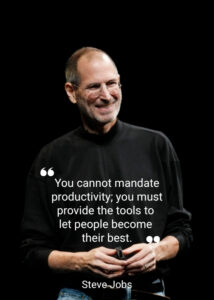
In manufacturing, outdated tools and systems can significantly hinder productivity and employee morale.
A survey by Atomik Research revealed that 52% of manufacturing employees encounter issues with antiquated equipment at least once a week, leading to frequent breakdowns and increased downtime.
Such inefficiencies not only slow down production but also contribute to employee frustration and disengagement. When workers are forced to navigate clunky software or unreliable machinery, it can lead to errors, delays, and a sense of being undervalued.
Nurturing Engagement: Small Changes, Big Impact
When burnout hits, engagement can quickly decline, but small adjustments can help reverse this trend. Simple strategies like fair scheduling, predictable shifts, and rotating job functions can ease the strain.
Providing ergonomic tools and wellness programs signals to employees that their well-being matters.
A simple “You’re doing great” can also go a long way. Recognition doesn’t need to be grand; sometimes, it’s the small, consistent gestures that inspire workers to stay engaged and motivated.