How to Motivate and Retain a Productive Manufacturing Workforce
Incentives, Rewards, and Benefits that Work
Creating Meaningful Incentives That Drive Engagement
Not all incentives are created equal. For an incentive program to truly resonate with employees, it needs to be clear, attainable, and transparent. The objective is simple: employees should always know exactly what they’re working toward, and they should trust that the rewards will be delivered as promised.

Here are a few incentive models that have proven effective in the manufacturing industry:
Performance Bonuses: Aligning bonuses with specific goals, such as meeting targets or completing tasks ahead of schedule, helps maintain focus and motivation. Clear goals tied to financial rewards drive results and performance.
Points Systems: Rewarding employees with points for actions like perfect attendance, teamwork, or adherence to safety protocols not only boosts morale but also fosters a sense of achievement. Points can be exchanged for meaningful rewards, whether it’s products, experiences, or even extra perks.
Flexible Scheduling: For shift-based teams, flexibility is often the most valued incentive. Offering extra PTO hours, the ability to choose preferred shifts, or swapping shifts with ease can be just as motivating as monetary incentives, if not more.
The key to success with these incentives is simplicity. Employees shouldn’t need a complex manual to understand how to earn and redeem their rewards. Keep it straightforward and approachable.
Tailoring Rewards to Your Workforce: The Power of Personalization
Rewarding employees is an essential part of a thriving workplace, but one-size-fits-all solutions often miss the mark. The best incentives resonate personally, and what works for one team may not be effective for another.
To create a truly impactful rewards program, it’s important to understand what your people value most. Personalization can turn a simple gesture into something memorable, boosting morale and increasing long-term engagement.
Custom Merchandise: Fostering Team Pride
Personalized rewards can make a huge impact in strengthening team spirit. Custom merchandise, like branded jackets, tools, or even mugs, offers both utility and a sense of belonging. Employees love wearing or using items that remind them of their contribution to the company.
In fact, according to a study by Promotional Products Association International, 83% of people can recall the branding on a promotional product they received in the past two years. Custom items also build team identity. Employees feel like part of a greater whole when they’re sporting company-branded gear.
Time Off: A Well-Deserved Break
Sometimes, the most meaningful reward isn’t a physical item; it’s time. A paid day off, especially after a challenging quarter or a long shift, can go a long way in boosting morale. It shows you trust your employees to manage their time while also recognizing the hard work they’ve put in.
Pat Wadors, Chief People Officer at Procore Technologies, once said, “The best way to care for employees is to respect their time. Time off isn’t just a perk; it’s essential for their well-being.” It’s true: burnout is real, and giving employees time to recharge leads to higher productivity and greater satisfaction in the long run.
Gift Cards: A Flexible Option
Gift cards are a reliable favorite for many companies, offering employees the ability to choose their rewards. Whether it’s for grocery stores, gas stations, or even Amazon, gift cards provide flexibility and ensure the reward will be meaningful to the recipient.
A 2022 report by the Incentive Research Foundation revealed that gift cards are one of the top employee reward choices, with 60% of employees saying they’d prefer a gift card over other options. They may seem simple, but they pack a punch in terms of impact.
Experience-Based Rewards: Creating Lasting Memories
Experience-based rewards, such as tickets to local events, restaurant vouchers, or family outings, add a personal touch to the recognition process.
These rewards give employees a chance to make lasting memories with their loved ones, reinforcing the connection between their personal life and the company culture.
Tony Hsieh, the late CEO of Zappos, once said, “Customer service is not a department, it’s everyone’s job. But it’s also about allowing employees to do things that matter to them.” By offering experiences that employees genuinely enjoy, companies can create an emotional bond with their workforce.
A Real-Life Example: A Reward Catalog
One packaging plant in the Midwest turned to a quarterly reward catalog for its employees, allowing them to “shop” with points earned through exceptional work. This reward system offered employees the chance to select items that mattered to them, whether it was Bluetooth speakers, extra days off, or personalized lunch coolers.
According to Gerry Anderson, CEO of DTE Energy, “When you give employees the power to choose their rewards, you validate their contributions and show respect for their individuality.” Offering choice makes employees feel empowered, and as we saw with the packaging plant, it results in a more personalized and engaging reward program.
Tax-Free Physical Goods with Amazon Business and Recognition
Using Amazon Business in your employee recognition program is simple and smart. It lets you offer tax-free physical rewards without the mess of managing inventory or paperwork. Platforms like Recognize make it even easier, letting employees pick from thousands of products. It’s a straightforward way to give meaningful rewards.
Empowering Choice and Ease
Employees can choose what they want, be it a coffee maker, noise-canceling headphones, or work boots. No guessing. No wasted rewards. With Amazon handling fulfillment, it’s a clean process that works for everyone. The reward is theirs, and the hassle is yours to avoid.
A Win for Your Budget
The tax-free status of physical goods is a bonus. Unlike gift cards, these rewards aren’t taxed as income. They’re business expenses, saving you money while still offering something employees will appreciate. It’s an efficient, easy way to recognize good work and keep employees satisfied.
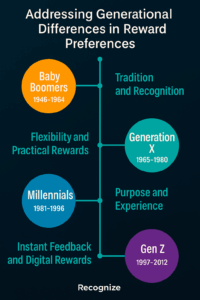
Addressing Generational Differences in Reward Preferences
Your workforce spans multiple generations, and understanding their distinct preferences for recognition is crucial. Different age groups value different forms of rewards, so tailoring your approach can help you reach everyone effectively.
Baby Boomers: Tradition and Recognition
For Baby Boomers, traditional rewards still hold strong value. They appreciate tangible recognition like plaques, monetary bonuses, and public acknowledgments. A company-wide shoutout or a heartfelt thank-you can go a long way in making them feel valued.
Data Insight: According to a Gallup poll, Baby Boomers (born 1946-1964) tend to value workplace stability and are more motivated by traditional recognition methods. Over 50% of Boomers said they appreciate public acknowledgment for their work, making company-wide recognition an impactful reward.
Generation X: Flexibility and Practical Rewards
Gen Xers (born 1965-1980) are often caught between the Baby Boomers’ work ethic and Millennials’ desire for flexibility. They value work-life balance, and rewards that offer practical benefits tend to resonate with them.
Data Insight: PwC’s NextGen Study found that Gen X employees are more likely to prefer rewards like extra paid time off or flexible working hours than other generations. Gen X is also drawn to practical, functional gifts, like quality gear or gift cards, giving them control over how to use their rewards.
Fun Fact: According to the American Time Use Survey, Gen X employees spend an average of 8 hours per week on household activities. Offering flexibility or extra time off helps them balance personal and professional demands more effectively.
Millennials: Purpose and Experience
Millennials (born 1981-1996) are driven by purpose, and they seek experiences rather than material rewards. They value recognition that highlights their alignment with a company’s mission and provides opportunities for growth and development.
Data Insight: Deloitte’s 2020 Global Human Capital Trends report found that 62% of Millennials are motivated by recognition linked to personal or professional development. Experiences, whether they’re learning opportunities or social recognition, are highly valued.
Fun Fact: Research by Gallup shows that 87% of Millennials want feedback on their work at least once a week. This makes social recognition, such as shout-outs in company newsletters or on social media, a highly effective way to acknowledge their efforts.
Gen Z: Instant Feedback and Digital Rewards
Gen Z (born 1997-2012) is the most digitally connected generation, and they expect instant feedback. They thrive on quick, visible recognition through digital badges, app-based rewards, or peer-to-peer shoutouts.
Data Insight: A 2021 study by the Workforce Institute at Kronos revealed that 68% of Gen Z employees feel more engaged when they receive immediate recognition, often preferring it over traditional methods like monetary bonuses.
Fun Fact: Forbes reports that Gen Z checks their phones an average of 150 times per day. Instant feedback through digital platforms, such as recognition apps, is a great way to tap into their need for constant engagement.
The Key Takeaway: A Layered Approach
The most effective reward programs blend a variety of reward types: tangible, experiential, and digital. Mixing these rewards ensures that every employee feels appreciated in the way they value most. Whether it’s a small bonus, a branded hoodie, or extra time off, rewards don’t need to be extravagant to be meaningful.
In the end, what matters is that employees see their hard work being recognized in a way that speaks to them personally. This boosts motivation and builds loyalty. A clear message like, “We see you, and we value what you bring to the team,” is the kind of recognition that keeps employees coming back for more.