How to Motivate and Retain a Productive Manufacturing Workforce
Safety, Wellness, and Engagement: A Holistic Approach
How Employee Engagement Strengthens Workplace Safety
When employees are engaged, they’re not just clocking in; they’re invested. And in a factory setting, that mindset makes all the difference when it comes to safety. Engaged workers follow procedures closely, spot hazards before they become problems, and speak up when they see something unsafe. They aren’t just following rules; they’re actively contributing to a safer work environment.
So, how does engagement lead to a safer workplace? It’s simple:
Proactive Reporting: Engaged employees are more likely to report safety concerns early, preventing incidents before they happen.
Ownership of Safety: When employees care about their role and their team, they take safety seriously because they feel responsible for the well-being of everyone.
Continuous Improvement: An engaged workforce doesn’t just follow the rules; they think about how things can be done better, safer, and more efficiently.
At the end of the day, when employees feel connected to their work, they’ll go the extra mile to make sure it’s safe for themselves and their colleagues. It’s a natural shift from being passive to being proactive. And in manufacturing, where safety is everything, that shift is invaluable.
Celebrating Safety: How Recognition Drives a Safer Workplace
If safety truly matters in your organization, it should be reflected in how you recognize employees. Too often, safety only enters the conversation when there’s a problem. By making it a regular part of your recognition strategy, you reinforce good habits and encourage a proactive mindset.
Consistently acknowledging safe behavior, like injury-free periods or strict adherence to protocols, shows employees that their efforts are seen and valued. It’s not just about compliance; it’s about taking pride in protecting one another.
Tools like Recognize make it easy for managers to celebrate safety milestones and reward standout contributors with badges or “Safety Star of the Month” awards. This ongoing recognition boosts morale, keeps safety top of mind, and builds a culture where everyone feels responsible and appreciated for keeping the workplace safe.
Prioritizing Employee Wellness: Supporting Mental Health in the Workplace
Safety is essential, but employee wellness, particularly mental health, is just as crucial. In physically demanding environments like manufacturing, stress and burnout can quietly take a toll, impacting not only well-being but also productivity.

Why Mental Health Matters
Recent studies show that mental health is a growing concern. A 2023 survey found that nearly 30% of workers worry about their emotional well-being at work, with 84% linking workplace conditions to mental health challenges.
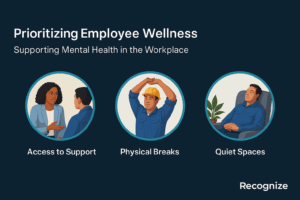
Simple Wellness Initiatives That Make a Difference
Small changes can have a big impact on wellness:
- Access to Support: Offering mental health resources, like counseling or Employee Assistance Programs (EAPs), can help employees manage stress and anxiety.
- Physical Breaks: Encouraging regular breaks and offering fitness incentives, like subsidized gym memberships, can reduce physical and mental strain.
- Quiet Spaces: Creating areas for employees to relax and reset during breaks can improve focus and reduce stress.
Encouraging Teamwork to Reduce Burnout
The best way to reduce burnout is simple: don’t let anyone carry the load alone. Strong teams act as a buffer between pressure and burnout. When people trust each other, communicate openly, and share the workload, tough shifts become manageable, and mistakes become less frequent.
You can build teamwork into your engagement strategy by pairing new hires with experienced employees for smoother onboarding, creating peer recognition moments to build mutual respect, using team-based incentives that reward group success, and encouraging leaders to model collaboration instead of just task delegation.
When teams celebrate victories together and support each other through challenges, they become more resilient. Burnout decreases.
Safety and wellness aren’t separate from engagement; they are part of it. When employees feel recognized, supported, and part of a strong team, they show up differently. They’re more careful, more focused, and more committed to their work.
A holistic approach that ties safety, wellness, and engagement together is not just about avoiding accidents or meeting quotas; it’s about building a culture where people thrive.